On the morning of August 2, the cars started leaving the Watermill Center. Not tourists, not weekenders, but the international artists who had been living on its ten acres since July 5, working in the sculpture gardens and the Library of Inspiration until their four-week residency ran out. Twenty-four hours earlier, ten minutes down Montauk Highway, the Parrish Art Museum had hung its next act. A two-part exhibition called Until the Moon Comes Over the Mountain, built with the FLAG Art Foundation, opened August 1 and will run through November 8.
Nobody synced these two calendars on purpose, or if they did, nobody advertised it. But if you live in Water Mill and you weren't watching for it, you missed the exact week your hamlet changed shape.
The overlap that isn't a coincidence, exactly
Water Mill spends its early summer as a residency town. The Watermill Center's International Summer Program, hosted every July and August, brings in artists who live on-site, share meals prepared by a staff chef, and use vehicles the Center provides to get to town and back. For four weeks the hamlet quietly hosts a working artist colony that most residents never see up close, since the program is closed to the public outside of scheduled events.
Then, on the exact day that colony packs up, the museum a few minutes away opens the exhibitions it has been building toward all year. Until the Moon Comes Over the Mountain is only one piece of it. Robert Indiana's ONE Through ZERO (The Ten Numbers), a set of six Cor-Ten steel sculptures that previously stood at the Glass House in New Canaan and Chatsworth House in England, is now installed in the Parrish's south meadow as part of that show. A few steps away, Will Ryman's Shanghai 6, a group of colossal painted fiberglass and stainless steel flowers from his long-running Rose series, is set to stay through March 2028.
That is not a slow news week. That is a hard cut from one kind of art to another, timed to the same 48 hours.
What's actually on the wall right now
If you haven't been inside the Parrish since early summer, the galleries have turned over more than usual this year. The museum is running a yearlong series called PARRISH USA250, tied to the country's semiquincentennial, and August landed in the middle of it.
Tony Bechara: An Artist of Many Worlds, the first career-spanning survey of the Puerto Rican artist, has been up since June 27 and runs through November 1. It's timed to the one-year mark since Bechara's passing and comes with an independently published monograph that includes an interview between Bechara and Hans Ulrich Obrist. Sanford Biggers' Drift is showing too, his first major solo museum exhibition anywhere on the East End. And the Parrish's ongoing Fresh Paint collaboration with FLAG just added a new diptych by Emmi Whitehorse, titled Reseeding Chaco, showing at the museum for the first time.
The museum's outdoor jazz concerts on the terrace and lawn are also back for the season, and this week specifically, the Parrish is running the second week of its Mini-Makers Camp, a half-day program for younger kids that pairs art-making with gallery time. If you're walking past the museum's meadow this week, you're walking past kids finishing a project inside while a sculpture from a 2011 New York City parks installation stands in the grass outside.
The Village Green runs on its own, older clock
While the Parrish turns over gallery shows on a museum's schedule, the Water Mill Museum on the Village Green keeps a slower one. The building itself is over 250 years old and still houses a restored, working water-powered grist mill, along with exhibits on the hamlet's whaling, farming, and Civil War history. It held a grounds event on August 1, the same day the Parrish opened its fall shows, and has gallery events scheduled for September 6, September 26, and October 13.
The museum's rhythm doesn't chase the calendar the way the Parrish does. It's open Thursday through Sunday, and its gallery rotates through the work of local artists and quilters rather than touring exhibitions. It is the version of Water Mill's art scene that was here before the Parrish moved to town in 2012, and it hasn't changed its pace to match.
Down Mecox Road, the season already turned
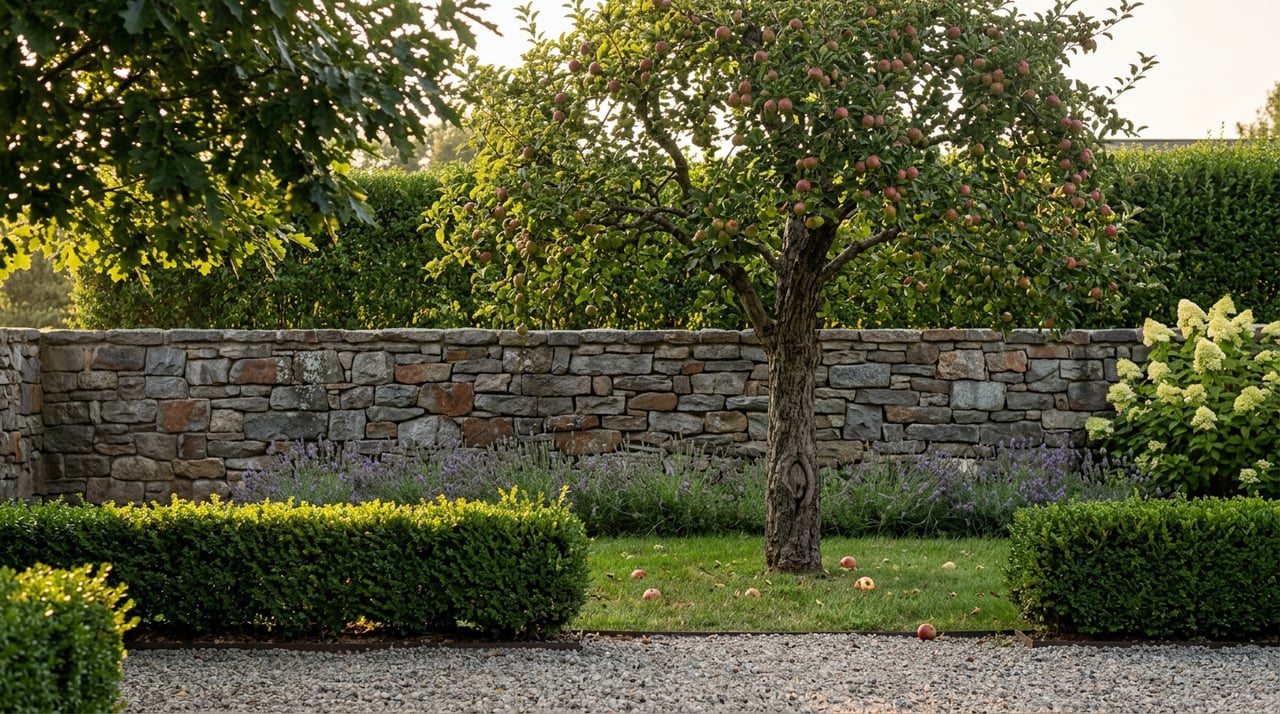
The clearest sign that Water Mill's calendar just flipped isn't in a gallery. It's at Milk Pail, the farm market at 757 Mecox Road. Through the Fourth of July, Milk Pail was open Thursday through Sunday. After the Fourth, it added Wednesdays. That's not a marketing decision, it's a demand signal: the farm knows its foot traffic climbs once summer starts sliding toward harvest, and it staffs accordingly. The orchard's 2026 U-Pick season for apples, pumpkins, and sunflowers is now the thing pulling people down that road, not peak-summer produce.
Hank's Pumpkintown, the farm stand at 240 Montauk Highway, runs the same seasonal logic on the other side of the hamlet. Between the two of them, and Duck Walk Vineyards a short drive away, Water Mill's agricultural identity doesn't disappear when the beach traffic thins out. It just changes what it's selling.
Dinner didn't get the memo
Here's the part of Water Mill that refuses to turn over with everything else: the restaurants. Bistro Été, the French bistro serving onion soup and steak frites, is still running its stylish summer setting. Calissa is still packed, still turning tables of visitors who came for the Greek menu and stayed for the atmosphere. Suki Zuki, Rumba, Cowfish, Pellegrino's, Bostwick's Chowder House, Sip N' Soda Luncheonette, Crispy Taco Co. None of them are pivoting to a fall menu just because the artists left and the museum hung new work. Water Mill's dining scene runs on Labor Day, not on exhibition dates or U-Pick calendars. It's the one clock in the hamlet that doesn't move until the actual summer ends.
What the overlap actually tells you
Put those four calendars next to each other and the pattern is obvious once you see it, even if nobody built it on purpose. The Watermill Center's residency ends. The Parrish's biggest fall slate opens the day before. Milk Pail already shifted its hours two weeks before either of those things happened, because the orchard business runs ahead of the arts calendar, not behind it. And the restaurants ignore all of it until the actual holiday weekend arrives.
That's the thing worth knowing if you live here: Water Mill isn't one season easing into another. It's four separate institutions, each with its own reason for changing when it changes, and this particular week is when three of the four flip at once while the fourth holds steady. If you know that, you know exactly what's worth walking into this month and what can wait. If you don't, you're just watching a hamlet that seems to be doing several unrelated things at the same time.
It isn't unrelated. It's just not one calendar. It's four, overlapping on purpose or not, and August is when you can see all of them at once.
If this is the kind of rhythm you'd want to live inside year-round rather than watch from a rental, David Tenenbaum tracks Water Mill's market the same way he tracks its calendar, closely, and can walk you through what's currently available in the hamlet. Schedule a showing when you're ready to see it in person.